





Portways Exim can discuss diced, sliced, chopped, peeled and diced, or other agreed frozen onion formats depending on buyer requirements and production feasibility.
-

Phone
+91 90047 69066
Portways Exim supplies Premium Frozen Onions from India for importers, wholesalers, distributors, supermarket suppliers, food manufacturers, restaurants, caterers, and HoReCa businesses.
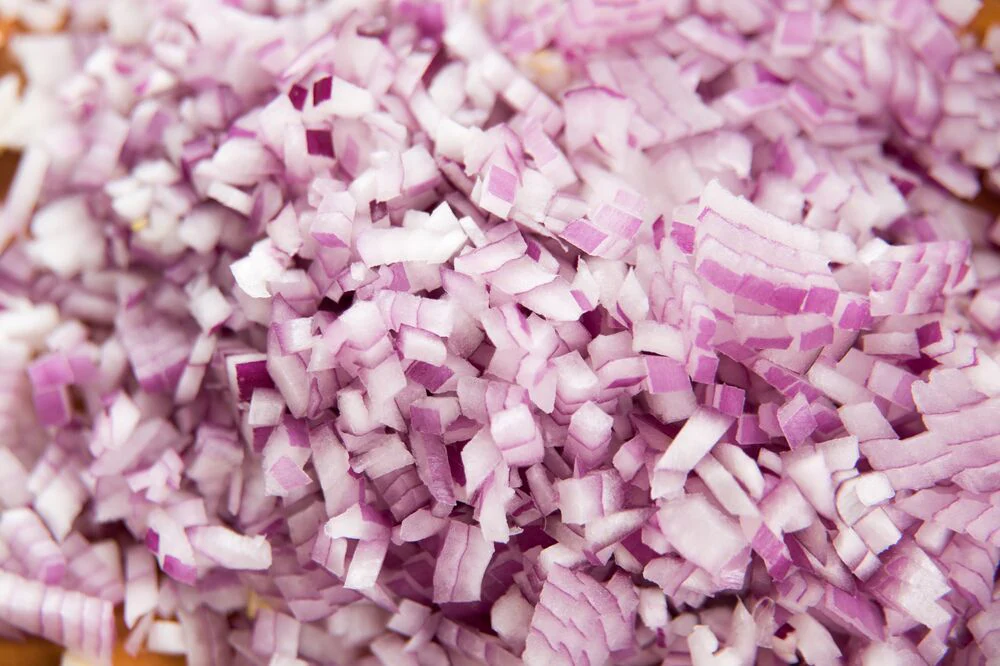
For commercial buyers, the value of frozen onions is not simply that the vegetable has been frozen. What matters is whether the product arrives in the required cut, maintains consistent quality, fits your production process, and can be supplied in quantities and packaging suitable for your market.
Our Ready-to-Cook Onion Dices and other frozen onion formats are designed for applications where preparation time, labour, storage, and consistency matter. Depending on the agreed specification, buyers can source peeled and diced formats or other cuts suitable for food processing and food-service operations.
Whether you are looking for frozen vegetables in bulk, regular wholesale supply, or a product suitable for retail distribution, Portways Exim can discuss the required specification, packaging, quantity, destination, and export documentation before shipment.
| Parameter | Typical Specification |
|---|---|
| Product | IQF Frozen Onions |
| Product Forms | Diced, sliced, chopped or agreed format |
| Raw Material | Fresh onions |
| Colour | Natural white to cream, depending on variety |
| Taste & Aroma | Characteristic onion flavour and aroma |
| Texture | Firm frozen pieces; texture after cooking depends on application |
| Processing | Individual Quick Freezing (IQF) |
| Storage Temperature | -18°C or below |
| Shelf Life | Typically up to 24 months, subject to specification |
| Origin | India |
| Packaging | Retail, food service, bulk or customized |
| Product Condition | Frozen |
| Application | Food processing, food service, retail and further processing |
For industrial buyers, additional parameters such as dice size, slice thickness, broken-piece tolerance, foreign matter limits, microbiological requirements, pesticide-residue specifications, and other destination-specific standards can be discussed.
Packaging should be selected according to how the product will be distributed, stored, and used.
Portways Exim can discuss retail, food-service, industrial, and customized packaging options based on buyer requirements.
| Parameter | Typical Specification |
|---|---|
| 400 g | Retail Stores |
| 1 kg | Supermarkets |
| 2.5 kg | Food Service |
| 5 kg | Restaurants & HoReCa |
| 10 kg | Industrial Food Processing |
| Bulk Cartons | Importers & Wholesalers |
| Private Label Packaging | Retail Brands |
Packaging discussions can include:
1. Bag size
2. Inner packaging
3. Outer carton configuration
4. Product labelling
5. Batch identification
6. Storage instructions
7. Pallet configuration
8. Private-label requirements
If you have an existing packaging specification or private-label artwork, provide it with your enquiry so the requirement can be evaluated before quotation.
India has an established agricultural and food-processing sector capable of supplying a wide range of vegetables to international markets.
Portways Exim can support frozen onion enquiries from buyers across:
The suitability of a frozen onion product depends on the destination country’s food-safety rules, import requirements, packaging and labelling regulations, product specifications, and applicable documentation.
This is especially important for companies researching frozen vegetables export from India, as requirements can differ between markets.
For international buyers, product quality needs to be supported by appropriate process controls and documentation.
Portways Exim can coordinate discussions around the required product specification before shipment, including cut size, packaging, quantity, destination requirements, and applicable quality parameters.
Depending on the product, processing facility, and destination market, relevant documentation may include:
Onions are naturally low in calories and provide carbohydrates, dietary fibre, and several micronutrients. Nutritional values may vary according to variety, maturity, processing, and preparation.
Typical values for raw onions per 100 g are:
| Nutrient | approx. value per 100g |
|---|---|
| Energy | 40 kcal |
| Protein | 1.1 g |
| Carbohydrates | 9.3 g |
| Sugars | 4.2 g |
| Dietary Fibre | 1.7 g |
| Fat | 0.1 g |
| Vitamin C | 7.4 mg |
| Potassium | 146 mg |
Preparing onions at commercial scale involves several repetitive steps: peeling, trimming, cutting, sorting, and managing fresh inventory. For food manufacturers and commercial kitchens, these activities can add labour and preparation time to every production cycle.
Frozen onions provide a practical alternative by supplying a prepared ingredient that can be stored and used according to production requirements.
For commercial buyers, Kitchen Ready Onions can help simplify:
Time-Saving Frozen Onions are particularly useful where onions are used as a regular ingredient across multiple dishes or production lines.
Ready-to-Cook Onion Dices can reduce the preparation work required before cooking or further processing.
A defined cut specification helps food manufacturers and commercial kitchens maintain consistency across recipes and production batches.
Pre-prepared onions can reduce the time spent peeling and cutting fresh onions, allowing kitchen and production staff to focus on other operations.
Our frozen onions can be considered for sauces, soups, ready meals, frozen foods, processed foods, seasoning preparations, and other manufacturing applications.
Frozen storage allows commercial buyers to maintain onion inventory without depending entirely on immediate fresh-market availability.
Businesses sourcing frozen vegetables wholesale can discuss larger-volume requirements according to product specification, packaging, destination, and shipment schedule.
Different food businesses use onions in different ways. A ready-meal manufacturer may require a defined dice size, while a restaurant supplier may prefer sliced onions.
Diced onions can be suitable for soups, sauces, gravies, curries, ready meals, prepared foods, and industrial food production. The required dice dimensions can be discussed according to the buyer's recipe and processing equipment.
Designed for greater production efficiency, our ready-to-use frozen onions eliminate the need for peeling, chopping, and other time-consuming preparation steps associated with fresh onions. They can be considered for Commercial kitchens, Ready-meal production, Food manufacturing, Sauces and gravies, Frozen foods, Catering operations.
Sliced onions can be used in prepared foods, food service, cooking applications, and further processing where a larger onion cut is preferred.
Chopped formats can be suitable for sauces, soups, fillings, seasoning mixes, processed foods, and commercial kitchen applications.
If your production line requires a specific cut size, thickness, packaging configuration, or other product parameter, the requirement can be reviewed before quotation.
Frozen onions are widely used as an ingredient rather than as a finished consumer product. This makes the correct cut, packaging, and consistency particularly important for B2B buyers.
Onions for Food Processing can be incorporated into Sauces, Gravies, Soups, Curries, Ready meals, Frozen meals, Seasoning preparations, Processed foods, Fillings, Convenience foods.
Prepared frozen onions can simplify ingredient handling in ready-meal production. Diced or sliced formats can be incorporated into recipes according to the required formulation.
Chef-Ready Frozen Onions can help commercial kitchens reduce repetitive preparation work, particularly where onions are used in high volumes. They can be suitable for Restaurants, Hotels, Caterers, Institutional kitchens, Cloud kitchens, Food-service operators.
Food-service distributors can supply frozen onion products to restaurants, catering companies, hotels, and commercial kitchens requiring convenient pre-prepared ingredients.
Depending on the target market, frozen onion products can be considered for retail freezer sections in appropriately sized consumer packs and compliant packaging.
A frozen vegetables distributor can use bulk or food-service frozen onions to supply multiple downstream customers with a convenient, consistent ingredient.
For frozen vegetables, commercial quality begins with the raw material and continues through every stage of processing.
Onions are sourced according to the required quality, maturity, variety, and intended application.
Incoming onions are inspected and sorted to remove material that does not meet the applicable product requirements.
The onions are cleaned and prepared for processing. Depending on the product specification, this can include trimming and peeling.
The prepared onions are diced, sliced, chopped, or processed into another agreed format.
The prepared onion pieces undergo Individual Quick Freezing to produce a convenient frozen ingredient with individually separated pieces.
The finished product is assessed against the agreed specification and relevant food-safety requirements.
The frozen onions are packed into the agreed retail, food-service, industrial, or customized packaging.
Finished goods are maintained under appropriate frozen conditions before dispatch.
Shipment planning considers quantity, packaging, destination, documentation, and cold-chain requirements.
For businesses purchasing frozen vegetables in bulk, the lowest unit price is rarely the only consideration.
Procurement teams may also evaluate:
Portways Exim can discuss bulk frozen onion requirements for importers, wholesalers, distributors, food manufacturers, supermarket suppliers, and food-service businesses.
For recurring supply, establishing a clear product specification before the first order can help create more predictable purchasing and reduce specification differences between shipments.
Commercial kitchens often need ingredients that can move quickly from storage to cooking.
Time-Saving Frozen Onions can reduce the repeated labour involved in peeling, trimming, and cutting fresh onions. This can be particularly useful in kitchens producing large quantities of curries, sauces, soups, gravies, fillings, and prepared meals.
For professional kitchens, the benefit is operational rather than simply nutritional: a pre-prepared frozen ingredient can help standardize preparation and reduce the amount of fresh produce that needs to be handled during busy service periods.
A successful frozen-vegetable shipment requires coordination beyond the product itself.
Portways Exim can support discussions around:
Commercial volumes can be planned according to product availability, packaging configuration, destination, and shipment requirements.
Frozen onions require controlled frozen conditions during storage and transportation. Shipment planning takes the specified storage conditions into account.
Commercial and regulatory documentation can be coordinated according to the product and destination requirements.
Retail, food-service, industrial, and private-label requirements can be discussed before production and shipment.
Quantity, destination, packaging, lead time, and shipping requirements can be considered before finalizing the commercial order.
For buyers comparing frozen vegetables exporters India, these practical aspects can be just as important as the product specification itself.
A suitable frozen vegetables supplier should understand the commercial requirement behind the product enquiry.
Portways Exim focuses on the details that matter to international buyers: What cut do you need? What volume are you purchasing? How will the onions be used? What packaging does your market require? Which documents are needed at destination?
We can discuss the required specification before quotation instead of assuming that one standard product works for every buyer.
Our focus is on importers, wholesalers, distributors, supermarket suppliers, food manufacturers, food-service businesses, and HoReCa operators.
Diced, sliced, chopped, peeled, and other agreed formats can be discussed according to production feasibility.
Portways Exim helps international buyers coordinate frozen vegetable sourcing from India.
Relevant commercial and shipment documentation can be coordinated according to the product and destination.
For repeat buyers, a clearly defined specification helps establish consistency across future shipments and gives both buyer and supplier a clear commercial reference point.
Portways Exim can discuss diced, sliced, chopped, peeled and diced, or other agreed frozen onion formats depending on buyer requirements and production feasibility.
Peeled and diced formats can be discussed based on the product specification, packaging requirements, quantity, and production availability.
Kitchen-ready onions are pre-prepared onion products designed to reduce the peeling and cutting work normally required before cooking. The exact preparation level depends on the agreed product specification.
MOQ depends on the product format, packaging, destination, supplier, and order volume. Share your required quantity and destination to receive a more specific commercial proposal.
Mixed-container shipments may be possible depending on product availability, packaging, minimum quantities, cold-chain requirements, and shipment planning. Share the products and quantities required so feasibility can be assessed.
Quality depends on suitable raw material selection, cleaning and preparation, processing, IQF freezing, packaging, frozen storage, and cold-chain transportation. The product specification and storage conditions should be agreed before shipment.